Smart Hydraulics
Load-sensing pumps adapt boom, arm and swing flow so a 30-ton excavator holds ISO 4406 cleanliness while running a hydraulic breaker without starving travel motors.
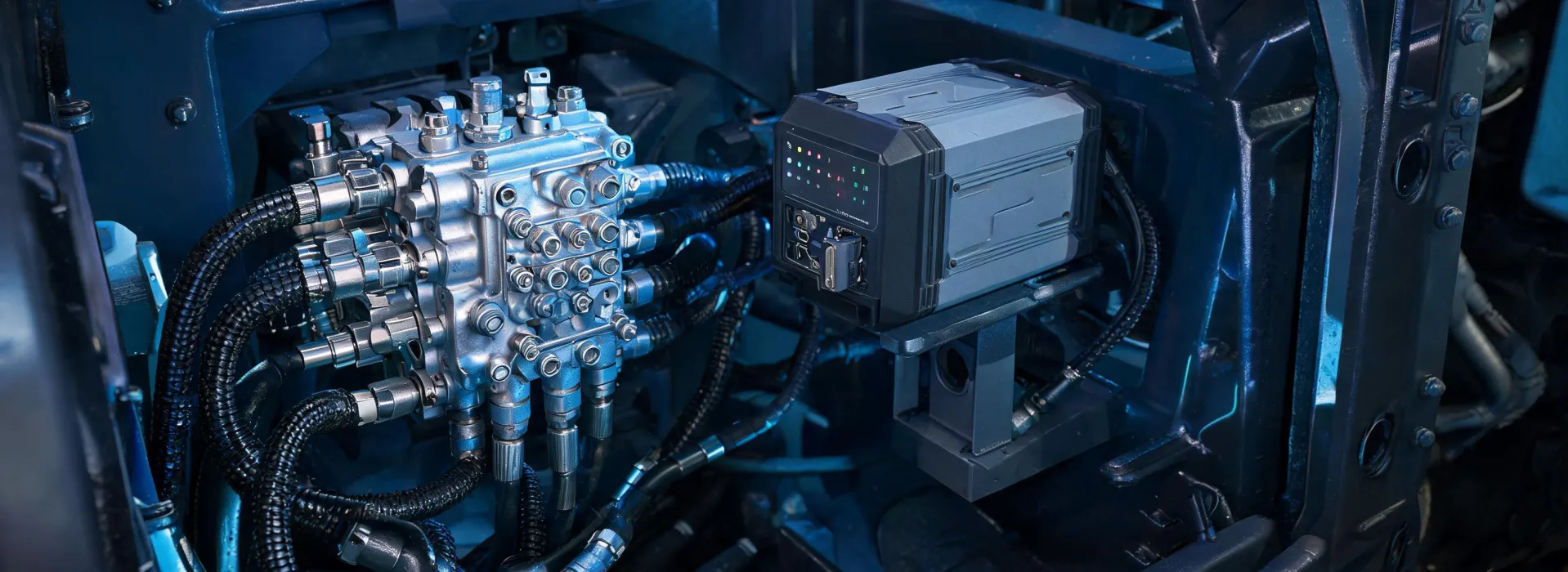
Hitachi invests in adaptive hydraulic control, predictive telematics and swing-energy recovery so procurement teams can defend fuel intensity and uptime to the board — not pledges, measured circuits.
We commit eight percent of annual revenue to excavator R&D — smart hydraulics, AEMP telematics and hybrid swing recovery — audited against patent filings and field fuel trials every year.
Load-sensing pumps adapt boom, arm and swing flow so a 30-ton excavator holds ISO 4406 cleanliness while running a hydraulic breaker without starving travel motors.
CAN-bus plus ISO 15143-3 AEMP streams push fault codes and temperature spikes so PM tickets open roughly thirty-seven hours before a predicted final-drive failure.
Swing-energy recovery and optional high-voltage assist cut idle diesel liters per cubic meter moved on urban trench packages with emissions caps.
Procurement teams often treat undercarriage choice as a brand preference. On Hitachi fleets it is a worksite math problem — ground pressure, transfer cost and duty cycle decide which side wins.
Lower ground pressure (typically 35–55 kPa on 20–40 t class machines) keeps the platform stable on soft quarry floors and deep cut faces. Breakout force and digging depth stay usable when the machine sits on spoil that would bog a wheeled unit. Trade-off: road transfers usually need a lowboy; shoe and sprocket wear accelerates on abrasive haul roads.
Self-propelled road travel cuts float-truck cost on urban drainage and shoulder packages with frequent site hops. Side-shift trenches and tire flotation help finished pavement protection. Trade-off: higher ground pressure and less stability on soft berms; wheeled units are the wrong primary iron for continuous mass excavation in wet clay.
Hitachi application engineers map both options against soil CBR, daily transfer kilometers and attachment duty before locking a class mix — neither undercarriage is universally preferred.
Smart hydraulics and hybrid swing packages do not erase site physics. These limits belong in the tender file alongside the load chart.
| Spec | 30 t crawler class | Unit |
|---|---|---|
| Operating weight | 29,800–32,500 | kg |
| Bucket capacity | 1.2–1.6 | m³ |
| Digging depth | 6,500–7,100 | mm |
| Engine power | 159–173 | kW |
| Hydraulic system pressure | 320–350 | bar |
| Breakout force | 142–168 | kN |
| Ground pressure | 42–52 | kPa |
Walk through hydraulic maps, telematics dashboards and hybrid fuel trials with a Hitachi application engineer.
Explore Smart Equipment Solutions